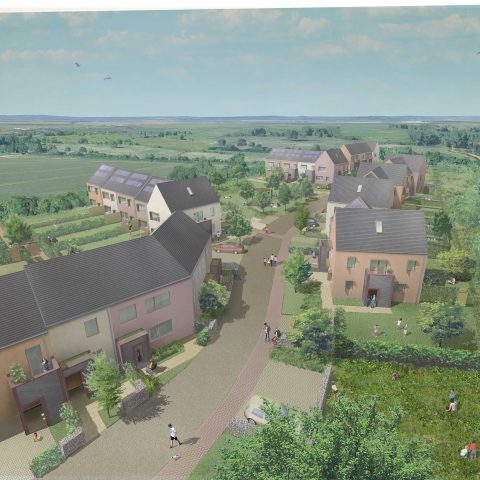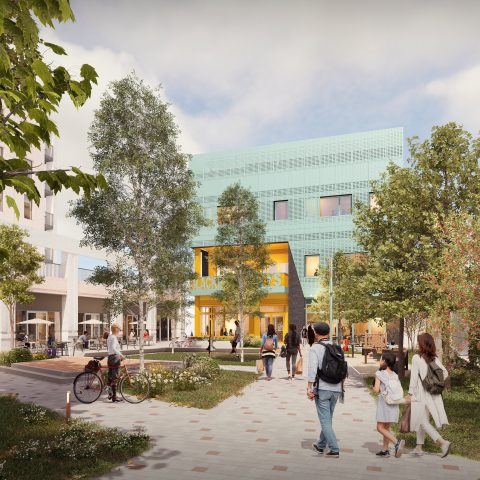
In March 2022, a design competition was launched to connect architects with Bristol-based Community Led Housing (CLH) groups to help unlock small sites for affordable housing development. The competition involved two stages — initial selection based on written responses, followed by an online matchmaking event where shortlisted architects pitched to community groups. Six architect-CLH group pairs were formed after a voting and selection process, with projects spread across various small sites in Bristol.
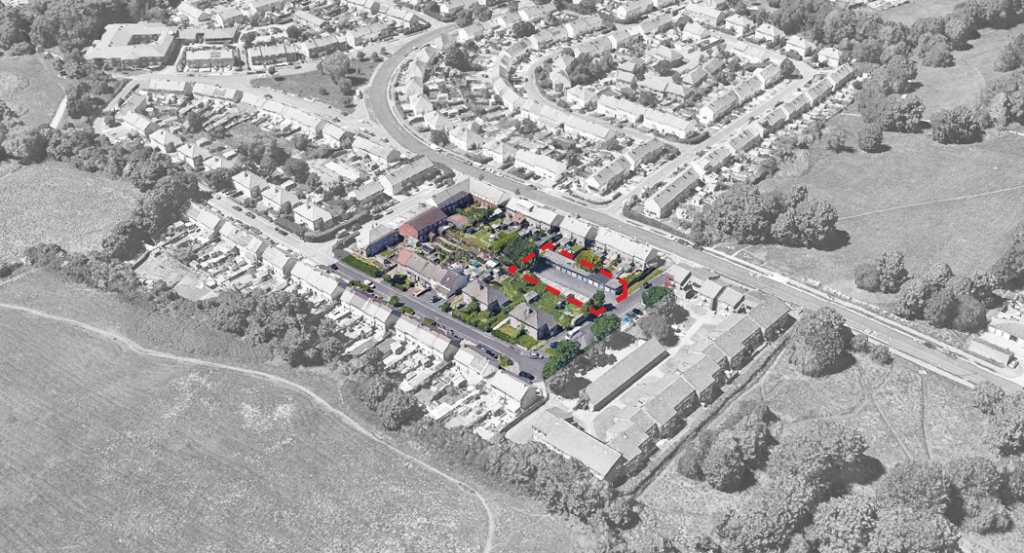
We were selected to be the project architects working on a scheme across two garage sites in collaboration with WeCanMake and the Black South West Network.
In summary the programme and scheme was a:
- Local authority-led initiative with local partners unlocking funding for feasibility studies
- Transparent & community-led procurement for professional services
- Land disposal prioritising community-led housing
Collaborators
Black South West Network (BSWN) are a Black-led racial justice charity organisation based in Bristol who support the development of dynamic, independent, and strong Black and Minoritised communities, businesses and organisations to flourish whilst challenging systemic barriers
WeCanMake is a community land trust and part of Knowle West Media Centre. It uses an asset-based approach to re-imagine “how to do housing” differently. It starts with the know-how and resources the community already has, and uses a process of creative co-design to work with people to develop the tools to do housing on their terms and build community wealth.
Transition by Design, together with WeCanMake and Black South West Network worked together to:
- Explore how community-led housing can diversify the type of homes delivered in Bristol in order to better meet the needs & aspirations of diverse people and places.
- Ensure the development of new housing counters structural inequality (including race, age and class), rather than reinforce it.
- Create “opt-in densification” by surfacing the kind of development communities would welcome and on what terms (including affordability, community ownership, investment in social infrastructure, tackling the climate emergency).
- Develop the capacity, stewardship and leadership of local people and communities through co-design and meanwhile use activation of sites.
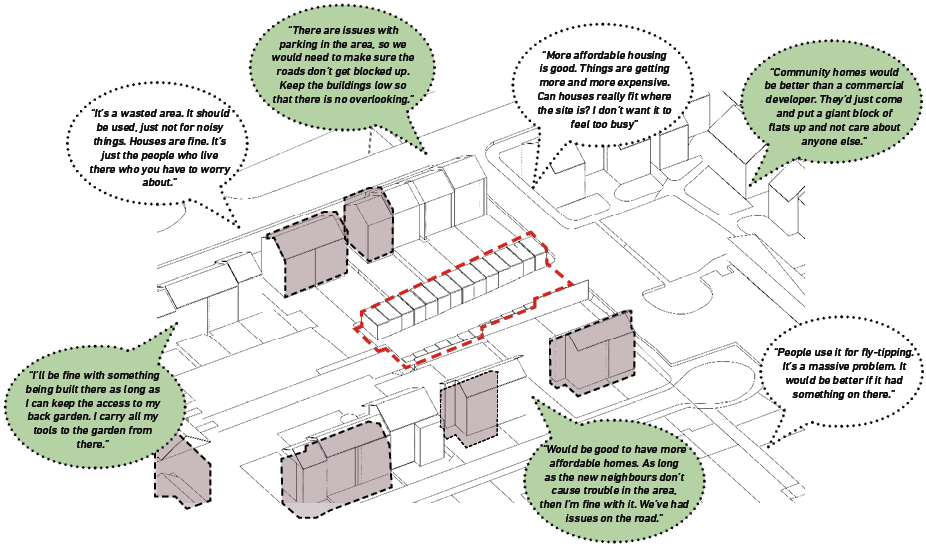
The process involved community engagement, design sessions, and a feasibility study.
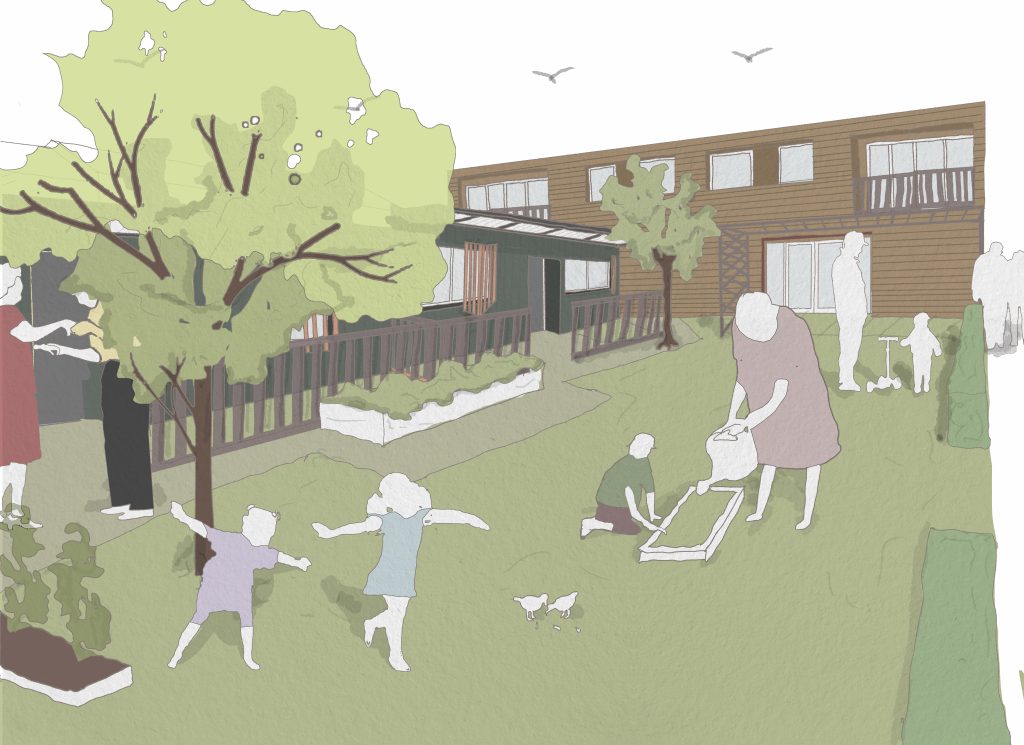
Design Option 1: Multigenerational Living
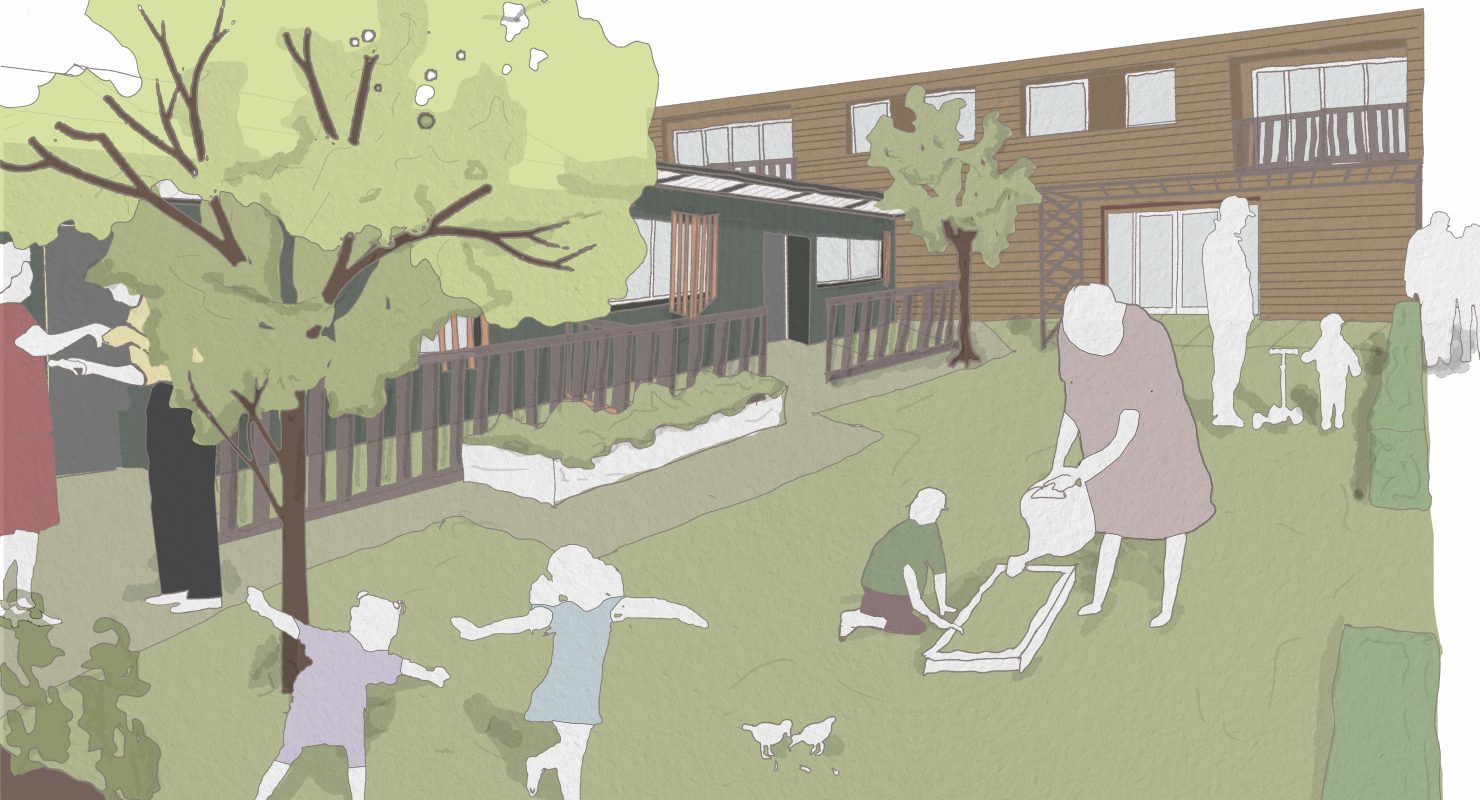
We created two design options for one of the sites. The design consists of a mix of house types and sizes to support different kinds of life-styles and life-stages. There is an option of linked tenancies between dwellings to support care networks. The design includes shared space of a courtyard garden, a common house with a community kitchen and a guest apartment for short stays.
Retaining and reusing the existing garages on site is a key element to this design. 9 of the existing garage structures would be repurposed and designed for accessible living with a DDA-compliant layout. Modern methods of construction focused on low embodied carbon through use of natural materials such as timber, would be manufactured locally to create jobs and community wealth. It would also minimise waste and length of build time.
The proposed plans included:
3 Ground Floor Dwellings: 2x (2 bedrooms, 3 person) and 1x (1 bedroom, 2 person)
1 Shared Common House including a bike/bin store & communal kitchen/lounge area
2 First Floor Dwellings: 2x (2 bedrooms, 3 person)
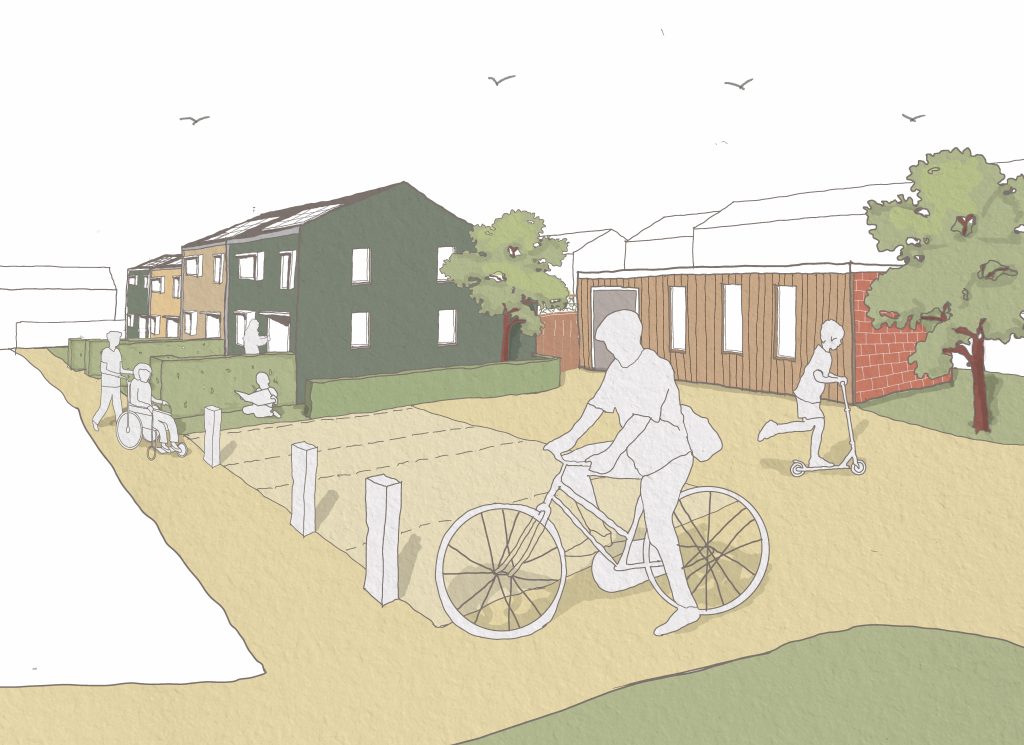
Design Option 2: Shared Family Living
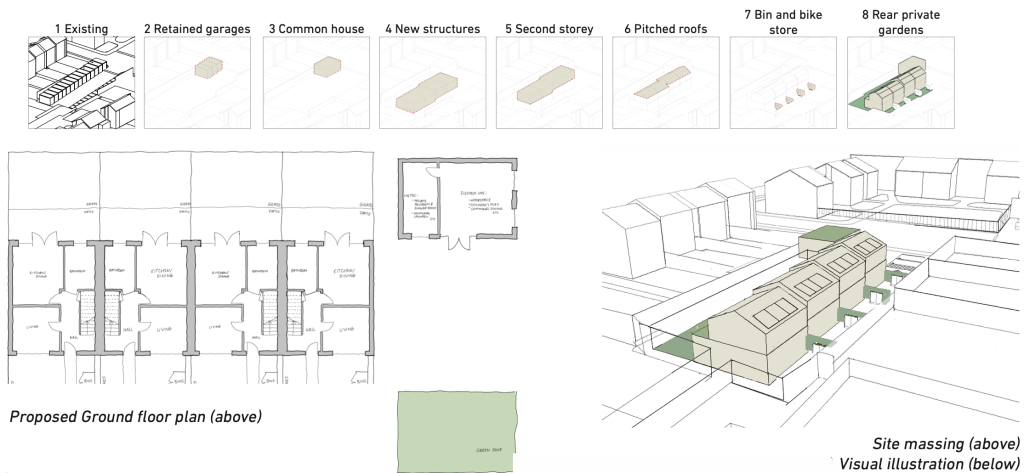
The design consists of small family homes (2-storey, 2-bedroom units), with a mix of private and shared green space. The design included a common house for flexible use for the residents, for purposes such as workspace, children’s play or other uses. There is also provision for a possible shared laundry space.
This option retains three of the garage units and proposes and places a housing typology, similar to the surrounding context, within the site.
The proposed plans include:
4x 2-storey units: 2 bedrooms, 3 person
1x common house: flexible use space (workspace, children’s play etc.) and a store / communal laundry space
A final showcase event in September 2022 presented the collaborative design work, receiving positive feedback and offering peer review to support further development of the CLH proposals.
Bristol City Council has announced the community-led housing groups who will be taking forward plans to develop five council-owned sites for affordable housing.
Success!
The following groups won successful bids:
1) Bristol Somali Resource Centre
2) Hometime Community Led Housing Group
3) We Can Make and Black South West Network (partnership) – who have taken on the site for further development
The project team leading the initiative were: Bristol City Council (Housing enabling team), Local Government Association – funder (LGA), Bristol Housing Festival, CLHWest Hub