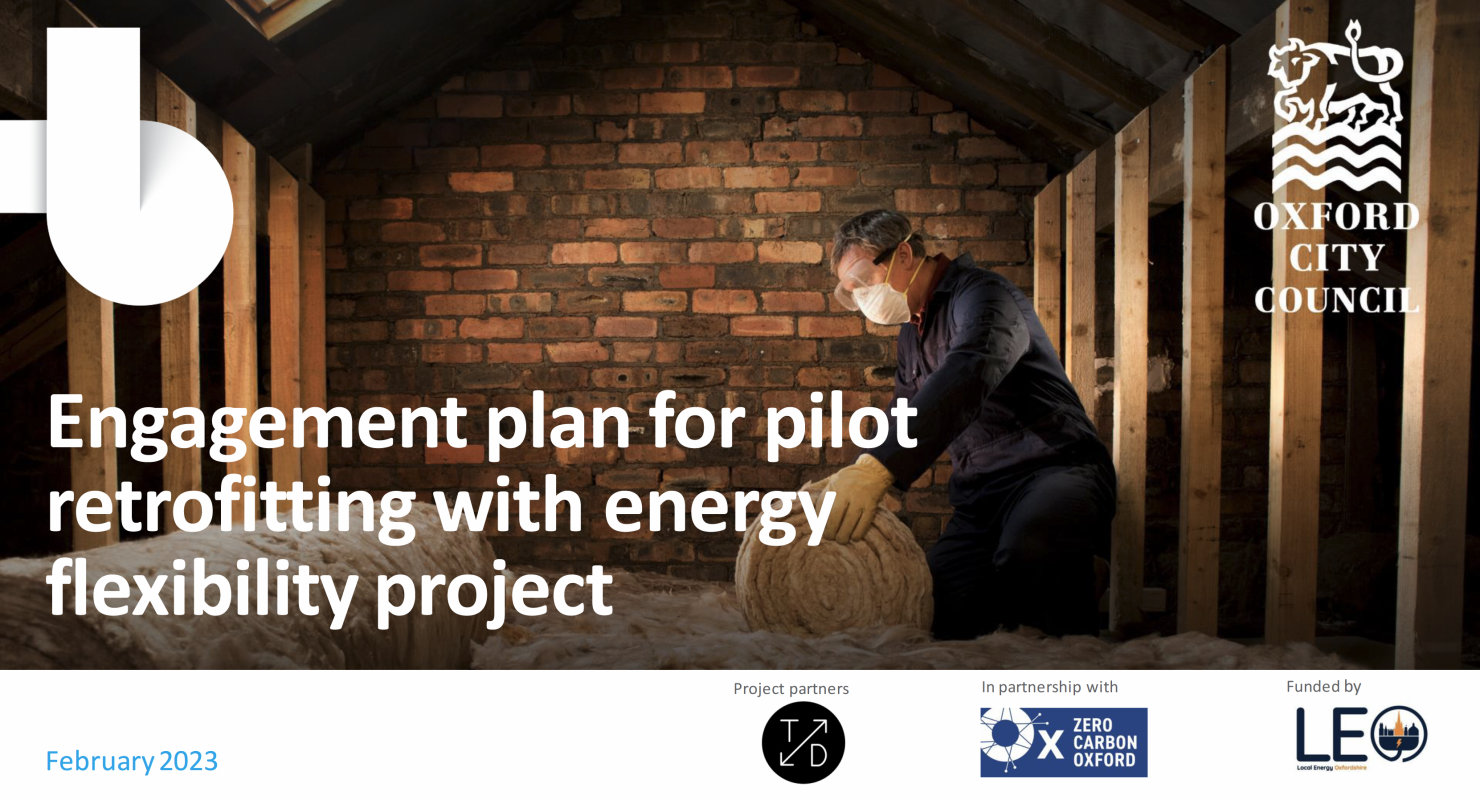
In 2022, Transition by Design were appointed together with Bioregional (environmental and sustainability charity) to produce a practical and scalable engagement plan for retrofitting with energy flexibility in Rose Hill Oxford. We sought to engage with residents in Rose Hill to identify the enablers and barriers for engaging with retrofit and energy flexibility. We met with residents of different backgrounds and across tenure types.
We engaged with communities by meeting them where they are at. We attended events within Rose Hill including, an autumnal tree planting & community centre celebration, Repair Cafe, Community Larder, Silver threads cafe (cafe for
seniors) meeting with local community groups including the Low Carbon Hub and Asylum Welcome. As part of our community engagement we also produced a written and online survey for residents to complete, and participants were remunerated for their time through a choice of vouchers or an energy saving device.

Transition by Design’s skills in retrofit, community engagement and research was incorporated at each stage of the project to produce a report that will help Oxford City Council reach its Net Zero 2040 target.


We also produced whole house-type retrofit plans for each of the key house-types in Rose Hill, and produced approximate calculations on the different levels of retrofit and the costs associated for each house-type.
In order to execute retrofit at scale, the supply chain needs to be adequately resourced to be able to do so. We conducted a large online event to gather key stakeholders in the supply chain and supplemented this with three one-to-one interviews to identify the barriers and the enablers for retrofit at scale with fitters, suppliers, energy suppliers and other key stakeholders.


Finally, we produced a report which captured the community engagement and survey findings, findings from the supply chain work, and the house-type whole house plans, costings and research. This report was widely circulated within the Zero Carbon Oxford Partnership, Oxford City Council, Oxford County Council and neighbouring County Councils as well as members of Project LEO (Low Energy Oxfordshire) and is currently being used to inform retrofit engagement strategies across Oxford City Council and neighbouring local authorities.